When a brand leaves, its phones stay
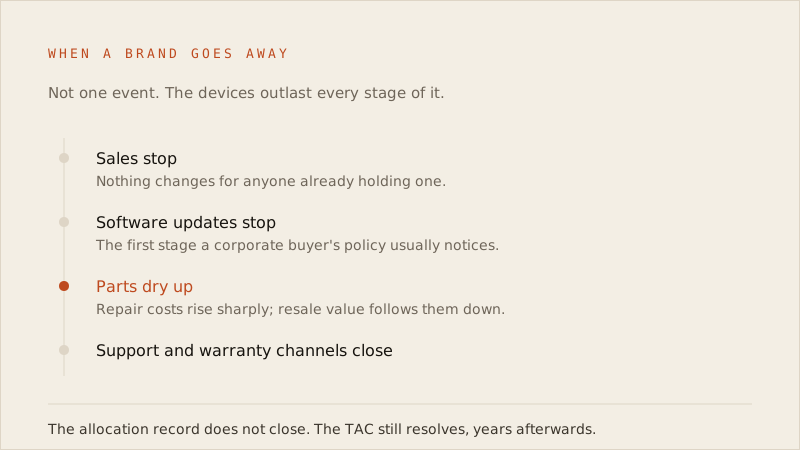
Sales stop, then updates, then parts. The handsets carry on circulating through all of it, and the allocation record never closes.
Phone brands leave markets regularly — bought, wound down, restructured, or simply withdrawn from a region. What does not happen is the devices leaving with them.
For anyone holding stock or maintaining a catalogue, the practical question is not whether a brand is still trading. It is which stage of the exit it has reached, because each stage moves the value differently.
The stages, and what each one changes
Sales stopping changes nothing for anyone already holding a device. It is the most reported stage and the least consequential.
Software updates stopping is the first stage a corporate buyer's policy notices, because security policies are usually written in terms of supported software rather than working hardware.
Parts drying up is the stage that moves money. Repair costs rise, repairs stop being economic, and resale value follows down — often faster than the market realises, because the pricing tables lag.
Support and warranty channels closing is mostly a formality by then, though it complicates any claim still open.
What to do with the stock
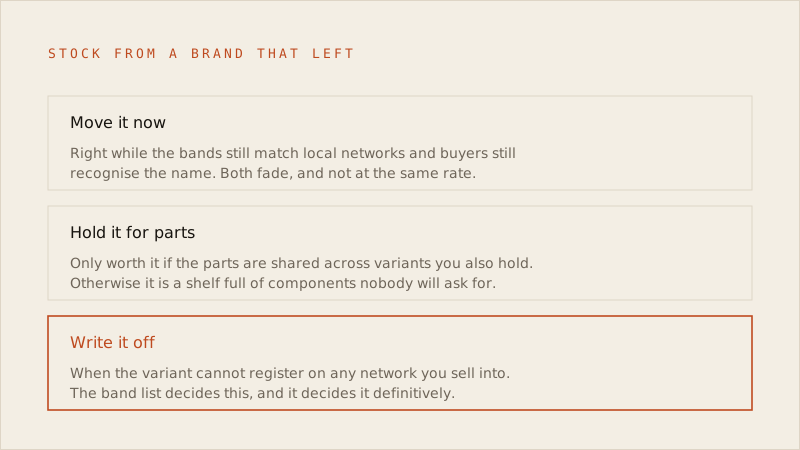
Moving it quickly is usually right, and the reason is that two things decay at once and at different rates: whether the bands still match local networks, and whether buyers still recognise the name. Neither recovers.
Holding for parts value is only sensible when the parts are shared with variants you also hold. Otherwise it is a shelf of components for which no demand will ever appear.
Writing it off is the honest answer when the variant cannot register on any network you sell into. That is a factual question, answered by the radio profile, and it does not improve with patience.
The catalogue problem
Catalogues maintained by hand tend to decay around departed brands first. Nobody adds new entries, existing entries stop being checked, and the model names drift out of alignment with what the devices actually are.
This is the quiet argument for resolving identity from the hardware rather than maintaining a list: a lookup does not care whether the manufacturer still exists. The record was written when the code was allocated, and it answers the same way regardless of what happened to the company afterwards.
Read next
Turn an IMEI into a device record.
Brand, model, code name, device type and radio bands, in one call. Tell us what you're building and we'll set you up with a key.