Five places to read an IMEI, ranked by how much to trust them
The dialled code is the only source that cannot be faked with a sticker. When the handset is dead or gone, four other routes remain — and one is usually forgotten.
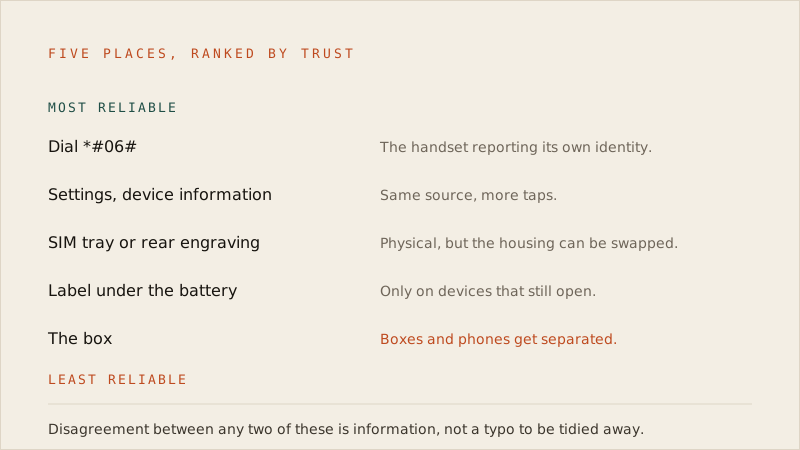
Most advice on finding an IMEI stops at "dial *#06#", which is correct and sometimes impossible. The device may be dead, locked, or no longer in anyone's possession — and those are exactly the situations where the number is most needed.
The ranking, and why it is a ranking
The dialled code is the most reliable source because it is the handset reporting its own identity from the hardware. Everything else is a copy someone made earlier, and copies can be wrong, stale or deliberately replaced.
The settings screen is the same source with more steps. Engravings on the SIM tray or the rear of the case are physical and hard to alter, but the housing they are on can be swapped. Labels inside the case are similar, and only exist on devices that still open.
The box is last. Boxes and phones get separated constantly — during repairs, resales and house moves — and a box proves the seller has a box.
When the handset will not power on
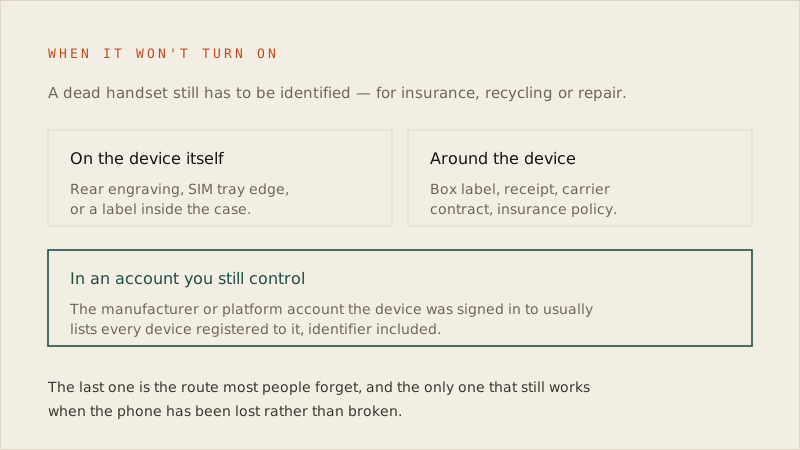
A dead handset still has to be identified — for an insurance claim, for recycling paperwork, or to order the part that will revive it. The physical routes still work: the tray, the engraving, the internal label.
So do the paper ones. The original receipt, the carrier contract and the insurance policy all frequently carry the identifier, and they are held by the owner rather than by the device.
The route people forget
The manufacturer or platform account the phone was signed in to usually lists every device registered to it, identifier included. That record lives on a server, not on the handset, so it survives the phone being broken, wiped or stolen.
This is the only route that still works when the device is simply gone, which makes it the most valuable one in precisely the situation where people are least likely to think of it — because they are looking for the phone rather than for a record of it.
It is worth knowing before you need it. Someone whose phone was stolen an hour ago is not in a good state to go exploring account settings, and the block that would make the handset worthless to a thief needs the number first.
A note for anyone collecting these at scale
If a process asks a customer to supply an identifier, it should say where to find it and accept the formats those places produce. Engravings often include spaces. Screens sometimes show two numbers on dual-SIM devices. Receipts occasionally list the serial number under a heading that says IMEI.
Handling that variety is a small piece of work at the input, and it converts directly into fewer rows that nobody can use later.
Read next
Turn an IMEI into a device record.
Brand, model, code name, device type and radio bands, in one call. Tell us what you're building and we'll set you up with a key.