Refurbished, renewed, remanufactured
Three words for a used phone, none of them legally defined in most markets. What they tend to mean, and which questions get you an answer that isn't marketing.
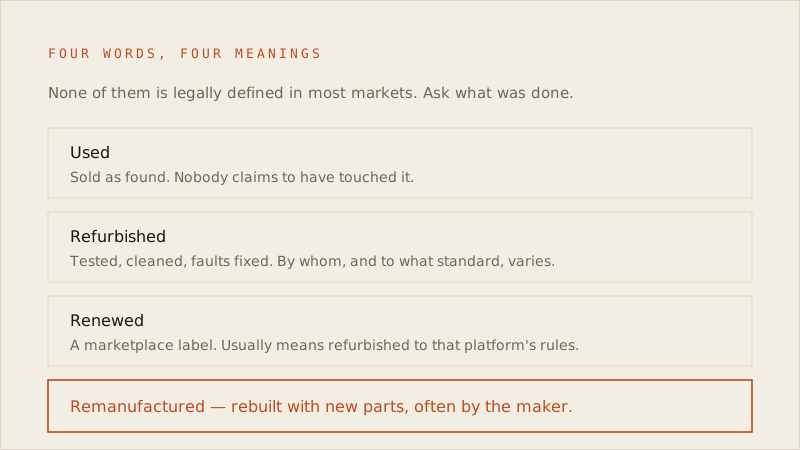
A phone that has been owned before can be sold as used, refurbished, renewed or remanufactured. The words sit on a rough ladder of implied effort, and in most markets not one of them carries a legal definition.
That is not a scandal. It is simply the reason why the word on the listing is a weaker signal than it looks, and why the useful question is never "is it refurbished?" but "what was actually done to it?"
What each tends to mean
| Word | Usually implies | Who did it |
|---|---|---|
| Used | Nothing beyond a wipe | The previous owner |
| Refurbished | Tested, cleaned, faults fixed | A shop or a specialist |
| Renewed | Refurbished to a platform's rules | A marketplace seller |
| Remanufactured | Rebuilt with new parts | Often the manufacturer |
The gap between the second and the fourth row is enormous and invisible in a product title. "Refurbished" covers everything from a battery replacement and a full diagnostic run to a wipe and a polish.
The questions that get real answers
- Which parts were replaced, and were they original? A replaced screen or battery changes both the value and, on some models, whether the phone reports a warning about non-genuine parts.
- What was tested? A list of tests is a much stronger claim than a grade letter, because it is falsifiable.
- Who did the work? A manufacturer refurbishment, a certified partner and a back-room repair are three different things wearing one word.
- What is the warranty, and who honours it? The answer separates a refurbisher standing behind their work from one who is not.
What identity does and does not settle
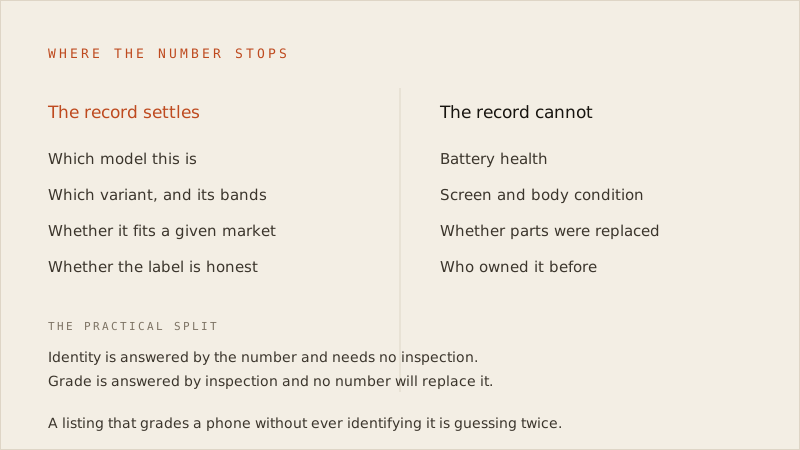
Resolving the identifier settles what the device is: model, variant, bands, and whether the market it was built for matches the market it is being sold into. That last one matters more in refurbished stock than in new, because refurbished stock travels — units bought cheaply in one region and resold in another are the trade's bread and butter.
It settles nothing about condition. Battery health, screen state, whether the case was opened and what was swapped inside — none of that is in a device record, and no lookup will produce it.
The mistake worth avoiding is treating a successful lookup as a quality signal. It confirms the phone is what it says it is. Whether it is any good is a separate investigation.
Why sellers should care about the distinction
For anyone selling refurbished stock at volume, identity and grade being separate is an advantage rather than a nuisance. Identity can be automated: read the number, resolve it, price from the variant. Grade cannot, and must be inspected.
Operations that conflate the two end up inspecting things a lookup would have told them for free, and trusting a lookup for things it was never able to answer. Splitting the work along the line the data actually falls on is both cheaper and more accurate.
Read next
Turn an IMEI into a device record.
Brand, model, code name, device type and radio bands, in one call. Tell us what you're building and we'll set you up with a key.