Why the band list is long, and why it decides everything
Forty entries that look like noise on a spec sheet. What matters is not how many a phone has, but how many it shares with the networks where you are.
Resolve an IMEI and one field is dramatically longer than the others: a list of forty-odd band designations that reads like inventory. It is the least glamorous field in the record and the one that most often decides whether a handset is worth anything.
What a band actually is
A band is a specific slice of radio spectrum, numbered by international agreement, that a network may be licensed to use. A phone can only talk on frequencies its hardware was built to transmit and receive on.
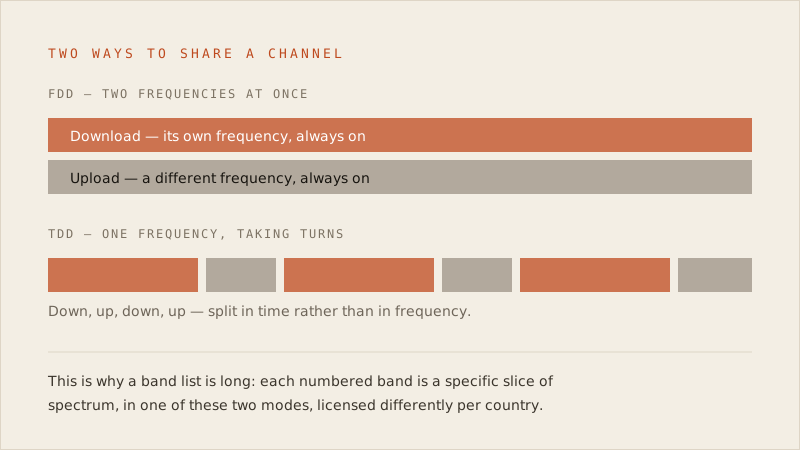
Each numbered band also comes in one of two arrangements. FDD gives upload and download their own separate frequencies, both running continuously. TDD uses a single frequency and alternates direction in time slots.
That is why the list is long: every combination of a spectrum slice and a mode is its own entry, and spectrum is allocated differently in every country.
Overlap, not count
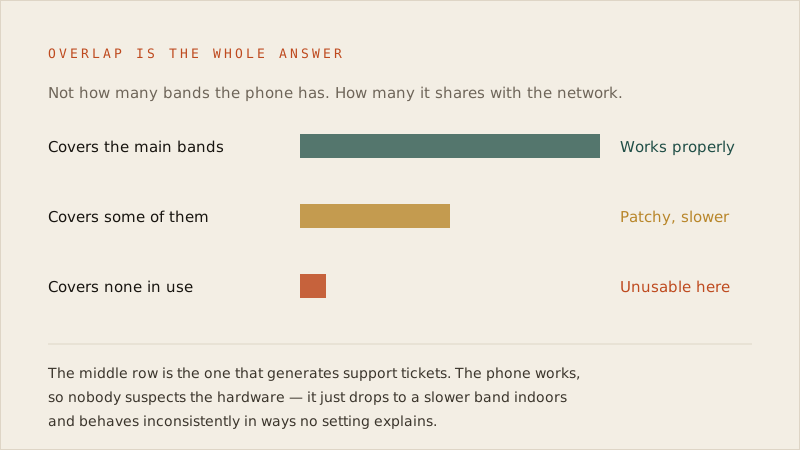
The instinct is to read a long list as better. What matters is the intersection between what the phone supports and what the networks around you actually run.
A handset covering the main local bands works properly. One covering none of them is unusable, and at least that is obvious. The awkward case is partial coverage: the phone works, so nobody suspects the hardware, but it falls back to a slower band indoors and behaves inconsistently in ways that no setting explains and no amount of support-line troubleshooting fixes.
Why it belongs in a device record
Because it is the field that answers a commercial question — is this worth anything in this market — and it is invisible in everything else. The model name does not carry it. The photograph does not. The seller frequently does not know.
- Cross-border resale lives or dies on it: a device bought cheaply in one market may not cover the destination's frequencies.
- Network shutdowns work through it: which handsets get stranded is decided by which bands they carry.
- Pricing depends on it: two variants of one model name can differ in value precisely because of this field.
It is worth storing in full rather than summarising. "Supports 4G" throws away exactly the detail that will be needed, and the full list costs a few hundred bytes.
Read next
Turn an IMEI into a device record.
Brand, model, code name, device type and radio bands, in one call. Tell us what you're building and we'll set you up with a key.