Half of a used phone's price is settled before anyone looks at it
Identity and variant come from the number, instantly and without opinion. Condition and market rate do not. Confusing the two halves is where margin leaks.
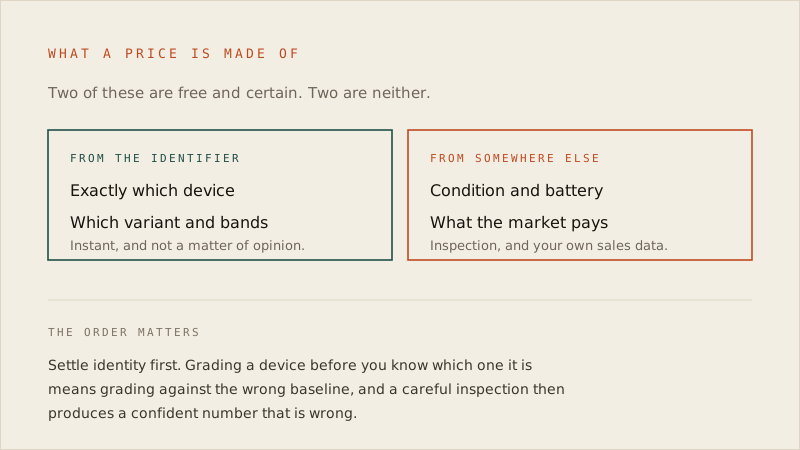
Pricing a second-hand handset feels like one judgement. It is really two, made from completely different kinds of evidence, and treating them as one is what produces confident numbers that are quietly wrong.
The half that is not a judgement
Which device this is, and which variant, come from the identifier. They are facts about the object, available in under a second, and not improved by anyone's experience or eye.
The half that is a judgement — condition, battery, cosmetic state — needs a person and a few minutes. The market rate needs your own sales history, which nothing external can supply.
What a single price per model name costs
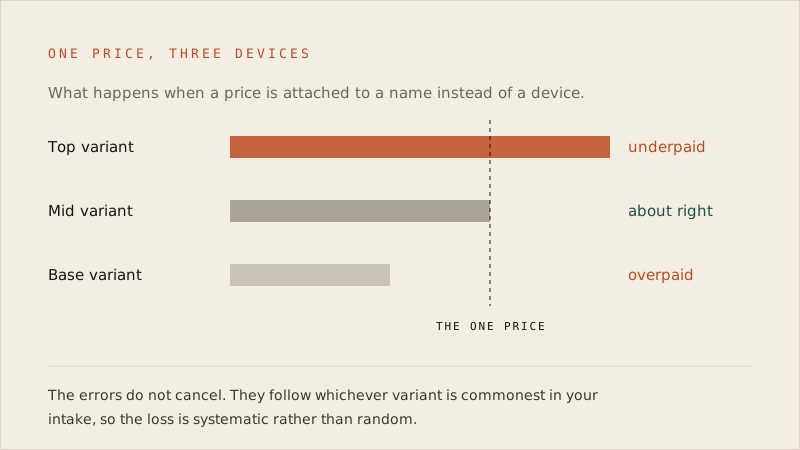
A price attached to a commercial name is an average across variants with different values. Every transaction is then slightly wrong, and the direction of the error depends on which variant walked through the door.
That is the part worth dwelling on. If the errors were random they would cancel over a year. They are not random: they follow the mix of your intake, so a business that mostly sees base variants systematically overpays, and one that mostly sees top variants systematically underpays and loses the stock to a competitor who does not.
Building the pricing rule
- Resolve first. Manufacturer, model, code name, device type, bands.
- Look up your own base price for that variant — not for the commercial name.
- Apply condition as a modifier on top, from an inspection with a written scale.
- Apply market adjustments last: what has sold recently, at what price, how quickly.
Two details in there earn their keep. The base price keyed on the variant is what fixes the systematic error. And the condition scale being written down is what makes two members of staff price the same phone the same way, which is the difference between a policy and a habit.
The bands are a pricing input too
It is easy to treat the radio profile as a technical detail. In a market where the network generation is shifting, it is the field that decides whether a handset is worth anything at all locally — and it is invisible in the model name.
A pricing table that ignores it will keep paying yesterday's prices for stock that stopped being usable, and will keep doing so until someone notices the returns.
Read next
Turn an IMEI into a device record.
Brand, model, code name, device type and radio bands, in one call. Tell us what you're building and we'll set you up with a key.