Most things with an IMEI are not phones
Trackers, alarm panels, payment terminals and meters all carry one. Systems that assume every lookup returns a handset get the arithmetic wrong.
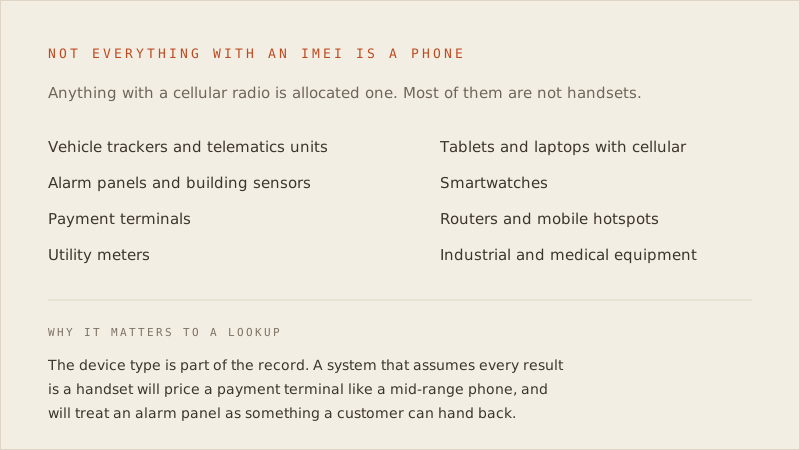
An IMEI is allocated to anything with a cellular radio. Handsets are the visible case and, by count of devices in the field, an increasingly small share of the total.
The device type is part of the record for exactly this reason, and it is the field most often ignored by systems built with phones in mind.
What else is out there
Vehicle trackers and telematics units. Alarm panels and building sensors. Payment terminals. Utility meters. Tablets and laptops with cellular modems. Smartwatches. Routers and mobile hotspots. Industrial and medical equipment with a decade-long service life.
All of them register on networks, all of them are identified the same way, and all of them can turn up in an intake queue that was designed around phones.
Why the type changes the question
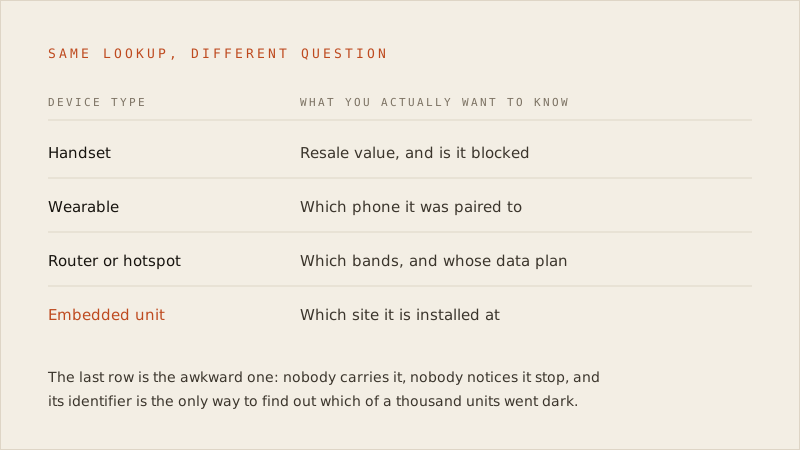
For a handset the useful questions are resale value and whether it is blocked. For a wearable, which phone it was paired to. For a router, which bands and whose data plan.
For an embedded unit the question is different in kind: which site is it installed at. Nobody carries it, nobody notices when it stops, and when a thousand of them are deployed the identifier is the only practical way to work out which ones went quiet.
Where the assumption bites
- Pricing. A payment terminal resolved by a system that assumes handsets gets valued like a mid-range phone, which it is not.
- Process. A buyback flow offering to "hand the device back to the customer" makes no sense for an alarm panel bolted to a wall.
- Counting. Statistics about "phones in circulation" built from identifier counts include a great deal that nobody would call a phone.
- Network shutdowns. Embedded units are the devices most exposed to a generation being switched off, because they were installed expecting to outlive it.
A note on the numbers you read about
Published figures for connected devices and published figures for smartphones differ by a wide margin, and both are correct — they are counting different populations.
When a figure is quoted without saying which, it is usually the larger one, because the larger one is more impressive. Anyone planning capacity or stock from those numbers should establish which population is being described before doing arithmetic with it.
Read next
Turn an IMEI into a device record.
Brand, model, code name, device type and radio bands, in one call. Tell us what you're building and we'll set you up with a key.