When a network is switched off, the phones don't disappear
2G and 3G shutdowns strand working handsets in stages. What decides whether a device survives is its band list — not its age, and not its condition.
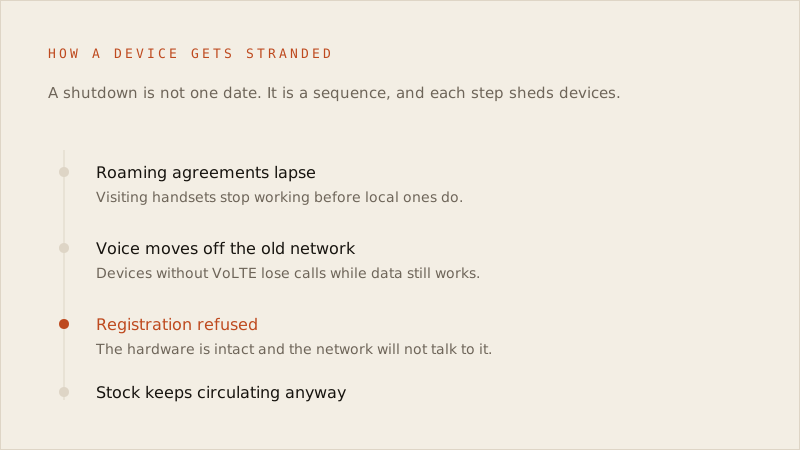
Operators have spent years retiring older network generations to free spectrum for newer ones. The announcements name a date. The experience of it is not a date at all, but a sequence — and each step in that sequence sheds a different group of devices.
How it actually unfolds
Roaming goes first. Agreements covering the old generation lapse before the domestic network closes, so visiting handsets stop working while local ones carry on. This is the stage where a traveller discovers the problem and the local shop cannot reproduce it.
Voice moves next. Calls shift onto the surviving generation, which requires the handset to support carrying voice over it. Devices that lack that support lose calls while data keeps working — a confusing intermediate state that generates a great deal of pointless troubleshooting.
Then registration is refused outright. The hardware is intact, the SIM is valid, the account is in good standing, and the network will not talk to it.
What decides whether a phone survives
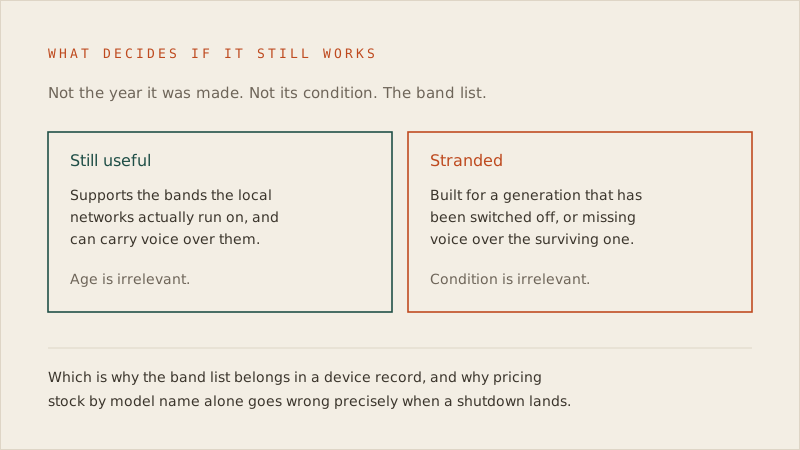
The band list, and whether voice can be carried on what remains. A five-year-old handset with the right bands keeps working. A newer one built for a market whose spectrum allocation differs does not.
This is why the radio profile belongs in a device record rather than being treated as a specification-sheet curiosity. It is the field that answers "will this work here, now", and it is the field most catalogues built around model names do not carry.
What it does to second-hand stock
Handsets do not stop existing when a network stops serving them. They circulate, get traded in, get shipped across borders and arrive at counters in markets where the relevant generation is still running — or is not.
- Stock priced on model name alone misprices sharply around a shutdown, because two variants of one model diverge in value overnight.
- Cross-border resale becomes riskier: a device perfectly serviceable in its origin market may be unusable in its destination.
- Trade-in valuations built on historical data lag reality, since the historical data was gathered while the network still worked.
The operations that handle this cleanly are the ones already resolving identity from the hardware rather than from a dropdown, because the variant distinction they need was already in the record they were pulling anyway.
The part nobody plans for
Shutdowns also strand things that are not phones. Alarm panels, vehicle trackers, payment terminals, lifts, industrial sensors — anything with a cellular radio built into a product that was expected to last a decade or more.
Those devices carry IMEIs too, and their device type is in the record. For anyone maintaining a fleet, the question of which units are about to go dark is answerable from identifiers already held — which is considerably cheaper than finding out one site at a time.
Read next
Turn an IMEI into a device record.
Brand, model, code name, device type and radio bands, in one call. Tell us what you're building and we'll set you up with a key.