Warranty runs on two clocks, and neither is the IMEI
Repair intake needs three different numbers for three different questions. Knowing which answers what stops parts being ordered twice.
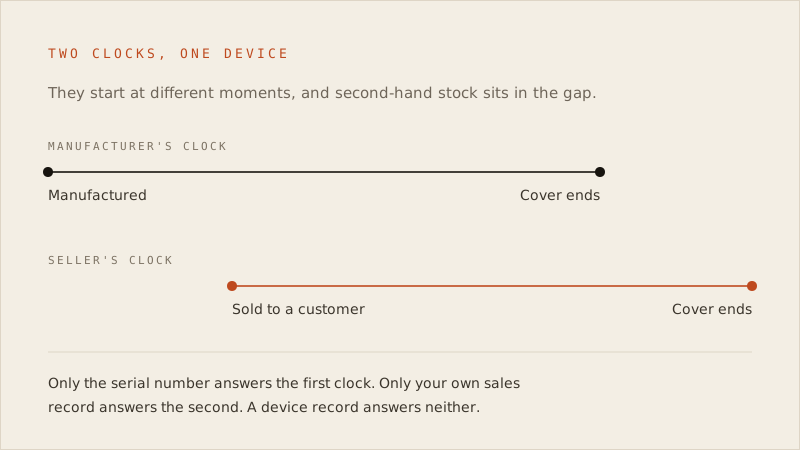
A repair counter has to answer several questions about a device before it can do anything useful, and they are answered by different numbers held in different systems. Getting the mapping wrong is how a shop ends up ordering the same part twice.
Two clocks that do not start together
Manufacturer warranty typically runs from manufacture or from first activation. Retailer or statutory warranty runs from the date of sale to the consumer. For a device sold new the gap is small. For second-hand stock it can be years.
That gap is not a technicality. A refurbished handset can be comfortably outside the maker's cover and freshly inside the seller's, which means two organisations reach opposite conclusions about the same phone on the same day, and both are right.
Which number for which question
| Question | Answered by |
|---|---|
| What device is this, exactly? | IMEI, resolved |
| Which variant, for parts? | IMEI, resolved |
| Is the maker's warranty live? | Serial number |
| Is our warranty live? | Your sales record |
| Has it been repaired before? | Serial number, or your own history |
| Was it reported stolen? | IMEI, against a registry |
The row that surprises people is the second. Ordering parts against a commercial model name is the single most common cause of a part arriving that does not fit, because displays and boards diverge between variants sold under one name.
The order that avoids rework
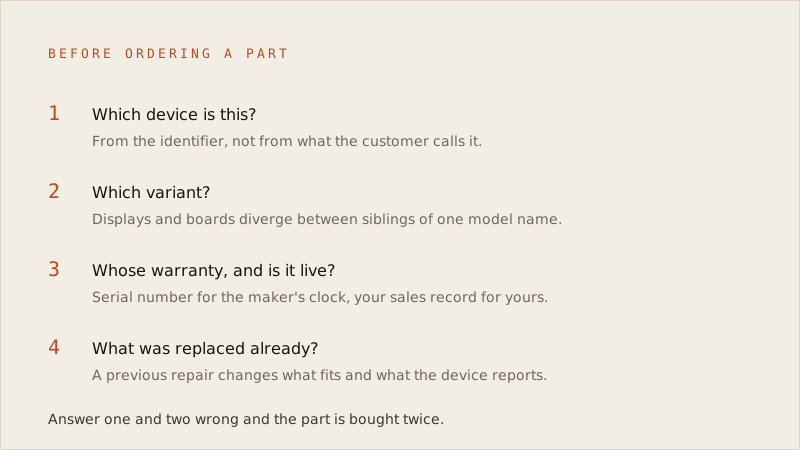
Identity first, from the identifier rather than from what the customer calls the phone. Then the variant, because that is what the part catalogue actually keys on. Only then is it worth working out whose warranty applies, since that determines who pays but not what to order.
The fourth question — what has already been replaced — is the one most likely to be skipped and the one that explains the strangest symptoms. A previous repair changes what fits, and on many current devices it also changes what the phone reports about itself.
Recording repairs so the next visit is cheaper
- Store the identifier with every repair, not just the customer name. The same handset returning under a different owner is common in second-hand stock, and only the number connects the two visits.
- Record which variant you resolved, not only the model name you displayed. That is what the next parts order needs.
- Note which parts were replaced and whether they were original. It changes the resale value and it explains warnings the device may show later.
- Keep the date of the repair against the identifier, so both warranty clocks can be reconstructed without asking the customer.
None of that requires a different system. It requires deciding that the identifier is the key the repair history hangs on, rather than the customer — because customers change and devices do not.
Read next
Turn an IMEI into a device record.
Brand, model, code name, device type and radio bands, in one call. Tell us what you're building and we'll set you up with a key.