The identifier is the only fixed point in a claim
Device insurance rests on knowing which handset was covered, which was lost and which was issued. Model names cannot carry that weight.
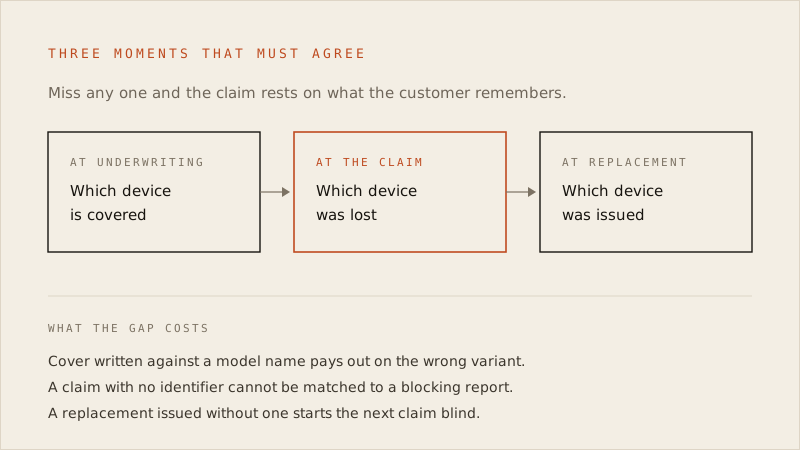
A device insurance policy is a promise about one specific object. Everything else in the file — the customer, the premium, the excess — is administration around that single fact, and if the object cannot be named precisely the policy is insuring an idea.
Three moments that have to agree
The identifier is needed at underwriting, at the claim, and at replacement. Miss it at any one of the three and the chain breaks in a way that only becomes visible later.
At underwriting, it establishes what is covered. Cover written against "Galaxy S24" quietly averages across variants with materially different values, and the customer who owns the expensive one is under-insured while the one with the cheap one is subsidising them.
At the claim, it establishes what was lost. Without it the insurer is accepting the claimant's account of which device they owned, at exactly the moment the claimant has an incentive to remember generously.
At replacement, it establishes what was handed over. Skip it and the next claim on that policy starts from nothing again — a surprisingly common gap, because by then everyone considers the case closed.
What the number exposes
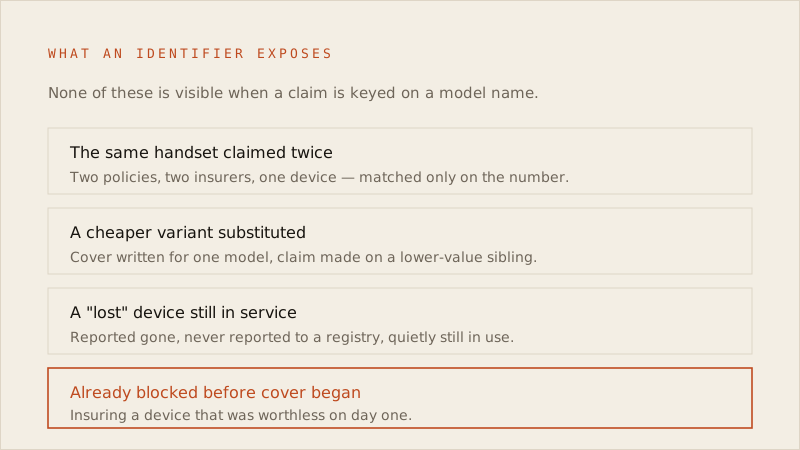
Duplicate claims across insurers are the clearest case. Two policies, two companies, one handset — the only field that can match them is the identifier, because names, addresses and model descriptions all vary between filings.
Substitution is quieter. Cover taken on a high-end model, a claim made after a lower-value sibling is lost, and a payout calculated against the wrong device. The variant distinction that catches it lives in the device record and nowhere else.
A device reported lost but never reported to a blocking registry, and still registering on networks afterwards, is a pattern worth noticing. So is a device that was already blocked before the policy incepted — cover sold on something that was worthless the day it was written.
The practical constraint
That single constraint shapes the whole process. It means the identifier belongs in the sign-up flow rather than the claims form, and it means an insurer who did not collect it at inception has no clean way to recover the position later.
What it still cannot do
Resolving an identifier establishes which device. It says nothing about its condition at inception, which is the other half of a valuation dispute, and nothing about whether the loss occurred as described.
Insurers that treat a successful lookup as validation of a claim have simply moved the guesswork somewhere less visible. The number settles identity — precisely, cheaply and without argument. The rest of the file still has to be worked.
Read next
Turn an IMEI into a device record.
Brand, model, code name, device type and radio bands, in one call. Tell us what you're building and we'll set you up with a key.