Three lists that stop agreeing about your fleet
Finance knows what was bought, the management system knows what checks in, and neither knows what is in the drawer. One field joins all three.
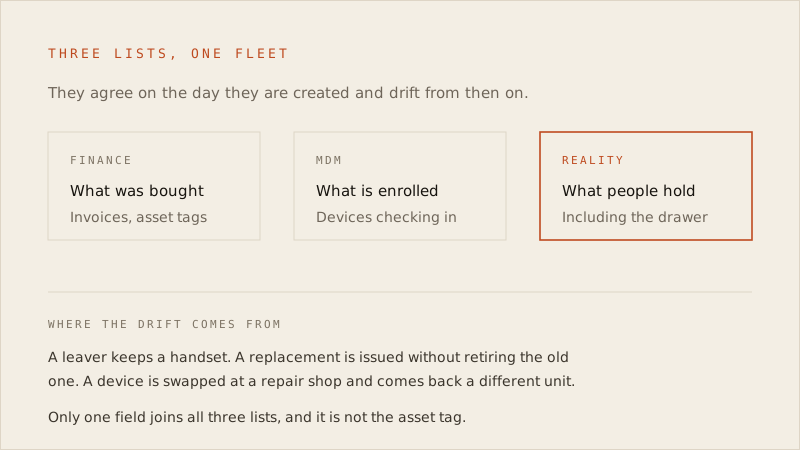
Any organisation issuing phones to staff ends up maintaining the same three lists, usually without deciding to. They agree on the day the fleet is created and diverge steadily from then on.
Where the drift comes from
Finance has an invoice trail: what was purchased, when, and for how much. It is authoritative about money and says nothing about where anything ended up.
The management system knows what enrols and checks in. It is authoritative about devices that are switched on and silent about everything in a drawer, everything a leaver kept, and everything that was never enrolled in the first place.
And then there is what people actually hold, which nobody has a system for and which is the only one that matters when something is lost.
The moments where records break
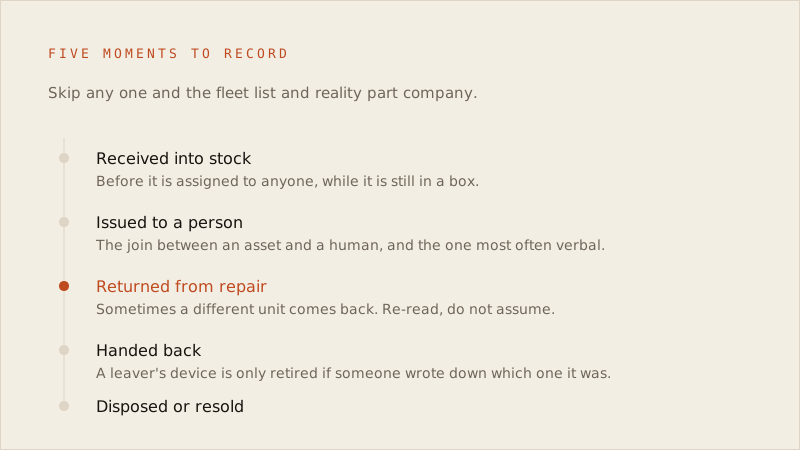
Receipt and issue are the obvious two, and the second is more fragile than it looks — the join between an asset and a person is frequently made verbally and written down later, or not.
Return from repair is the surprising one. A device sent away for repair does not always come back as the same unit; some repair processes swap the whole handset. If nobody re-reads the identifier, the fleet record now points at a device that is somewhere else entirely, and the one in use is invisible.
Hand-back is where most drift accumulates, simply because a leaver's device is only retired from the fleet if somebody recorded which device it was.
What this costs
- Licences and plans paid for devices nobody is using, because they were never retired.
- A stolen handset that cannot be blocked promptly, because the identifier has to be found before it can be reported.
- Insurance claims that stall on evidence of which device was covered.
- An audit that cannot be completed without a physical count, which is the expensive way to answer a question a field would have answered.
The correction is small
Capture the identifier at each of the five moments, store it as the key rather than as a note, and reconcile the three lists against it periodically rather than against each other.
Resolving the identifiers also tells you what the fleet actually consists of, which is frequently not what the purchasing records suggest — variants differ, replacements were bought ad hoc, and a device type that is not a phone has usually crept in somewhere.
None of this needs new software. It needs the fleet list to be keyed on something that came from the device rather than on something a person assigned to it.
Read next
Turn an IMEI into a device record.
Brand, model, code name, device type and radio bands, in one call. Tell us what you're building and we'll set you up with a key.