You bought a phone and it turned out to be blocked
What can actually be done, in what order, and why paying someone to unblock it is the one option that never works.
The phone worked when you tested it, or you did not test it, and now it will not register on any network. A check confirms the identifier is blocked. This piece is about what to do from there.
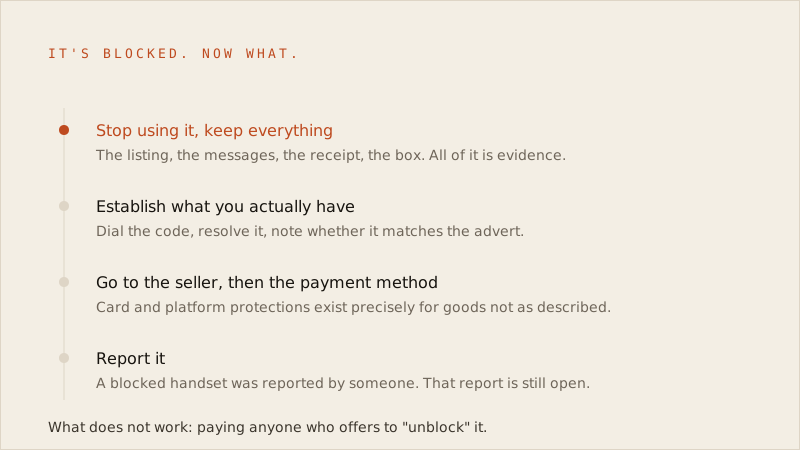
First, stop and keep everything
Stop using the device. Keep the listing, the messages, the receipt, the payment record, the packaging — all of it. What feels like clutter is the evidence any subsequent step will ask for, and it becomes much harder to reconstruct once an advert is deleted.
Then establish precisely what you have. Dial the code on the handset, resolve the number, and note whether the device matches what was advertised. A blocked handset that is also a different model than described is a materially stronger position than a blocked one that matches.
Then the seller, then the payment method
The seller comes first, if they are reachable. Some genuinely did not know: a device reported by a previous owner, or by an insurer after a claim, blocks without the current holder being told.
Where the seller is unreachable or unwilling, the payment method is usually the real remedy. Card schemes and marketplace protections exist precisely for goods not as described, and a blocked handset is about as clear a case of that as exists. This is the strongest argument for never paying by irreversible transfer, and it is an argument that only helps before the purchase.
Report it
A blocked handset was blocked because somebody reported it. That report is still open, and the device may be stolen property — which affects your position, and theirs.
Reporting is worth doing even when it will not get your money back. It is what connects a device in circulation to a case that is otherwise dormant, and in some jurisdictions it also matters for your own position if the phone is later traced to you.
What does not work
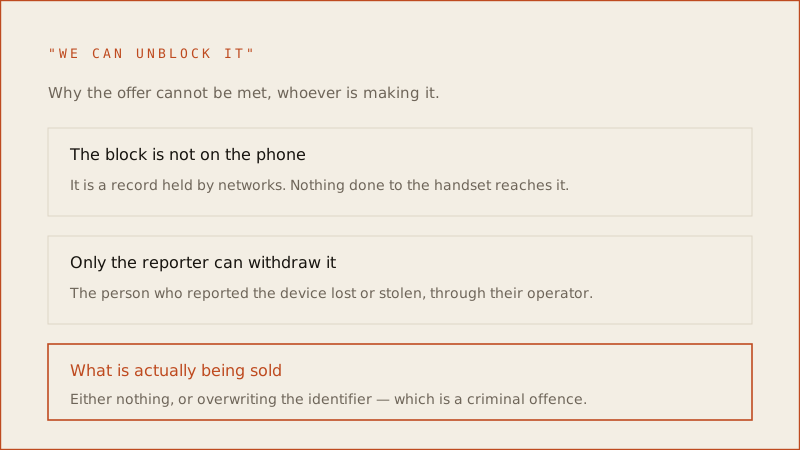
Services offering to unblock a handset for a fee cannot deliver what they are selling. The block is a record held by networks, not a setting on the device — so no software, no reset, no repair reaches it.
The only legitimate route to removing a block is the person who reported the device, through their operator, usually because the phone was found or the report was mistaken. Nobody else can do it, whatever their website claims.
What such services actually offer is one of two things: nothing at all, or overwriting the device identifier — which is a criminal offence in most jurisdictions and leaves you holding a device whose printed and reported numbers disagree. That is a worse position than the one you started in, and it is a position you paid for.
The uncomfortable conclusion
Sometimes there is no recovery. A cash purchase from an unreachable seller of a device that is genuinely blocked is a loss, and the honest advice is to pursue the payment route quickly and then stop spending money on it.
Which is the argument for the check that takes five seconds before handing over anything. It is not that checking guarantees a good outcome — it is that not checking removes every remedy that depends on acting quickly.
Read next
Turn an IMEI into a device record.
Brand, model, code name, device type and radio bands, in one call. Tell us what you're building and we'll set you up with a key.