The ICCID is the card's number, not the phone's
Up to twenty digits printed along a SIM. It identifies a piece of plastic that moves between handsets — which is exactly why it answers none of the questions people ask it.
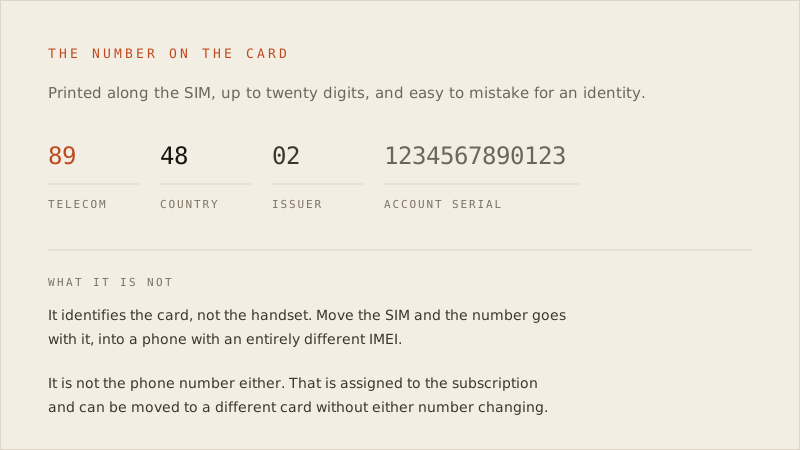
The long number printed along the edge of a SIM card is the ICCID — the Integrated Circuit Card Identifier. It is a genuine unique identifier, and it identifies the card.
That last point does most of the work in this piece, because the card is the one component in the assembly specifically designed to be moved somewhere else.
What the digits carry
An ICCID is up to twenty digits and begins with 89, the industry identifier assigned to telecommunications. What follows is a country code, an issuer code identifying the operator, and a serial number for the individual card.
Unlike the IMEI, its structure is a numbering convention rather than a device registry. Knowing the issuer code tells you which operator issued the card; there is no equivalent of the Type Allocation Code, and no lookup that turns an ICCID into a piece of hardware.
Four numbers, and which stays with what
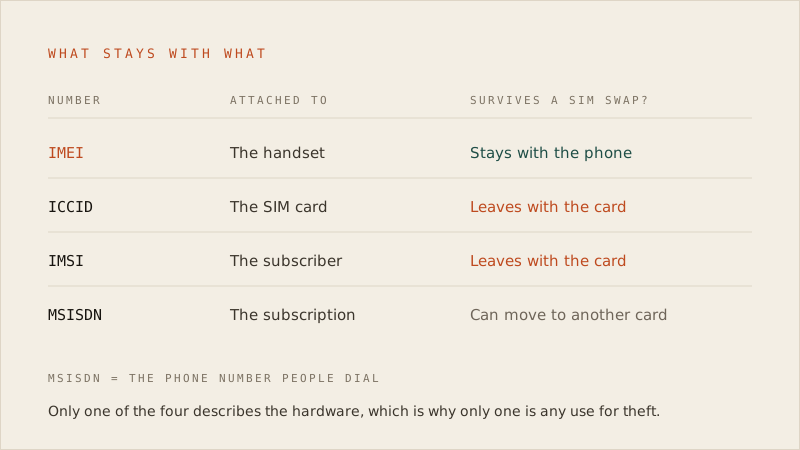
A working phone connection involves four identifiers at once, and the confusion between them is entirely reasonable, because in ordinary use they travel together and nobody has cause to separate them.
They separate the moment something moves. Swap the SIM into another handset and the ICCID and IMSI go with it while the IMEI stays behind. Port the number to a new card and the MSISDN moves while the ICCID does not. Each of those is a routine operation, and each breaks an assumption that the four are one thing.
Why it matters for anything theft-related
People reporting a lost phone sometimes offer the ICCID, because it is written down somewhere and looks official. It cannot support a device block.
Blocking works on the handset identifier precisely because the handset is what was stolen. Blocking the card achieves nothing useful: the card is worthless, trivially replaced, and the first thing a thief discards.
Where it is genuinely the right number
For anything about the subscription rather than the device, the ICCID is exactly right. Activating a card, tracking stock of unissued SIMs, reconciling which cards an operator has distributed, matching a physical card to an account — all of these are card questions and the card has a number.
The eSIM case is worth noting alongside it. An eSIM profile also carries an ICCID, and the physical chip it is installed on has its own identifier again, the EID. The pattern holds: the subscription identifier moves, the hardware identifier does not, and only one of them tells you what you are holding.
Read next
Turn an IMEI into a device record.
Brand, model, code name, device type and radio bands, in one call. Tell us what you're building and we'll set you up with a key.