A phone is approved market by market, not once
Certification attaches to a hardware variant and a jurisdiction. That is why a genuine handset can be perfectly legal to own and awkward to sell where you are.
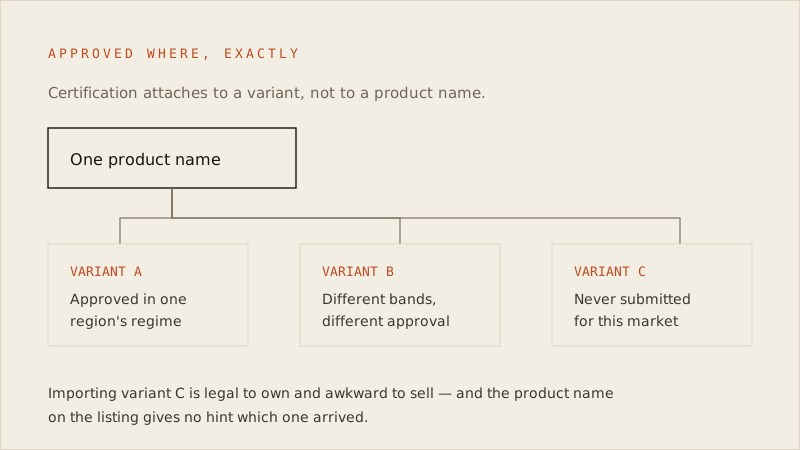
Before a phone can be sold in a market, it has to be approved for that market: tested against the local rules for radio emissions, safety and electromagnetic compatibility, and registered with whichever authority is responsible.
The part that matters commercially is what the approval attaches to. Not the product, and not the brand — the specific hardware variant that was submitted.
Why one product needs several approvals
Spectrum is allocated differently in different countries, so a manufacturer builds variants with different radio configurations for different regions. Each of those is, from a regulator's point of view, a different thing to be assessed.
So a single commercial name can correspond to a variant approved here, a variant approved there, and a variant never submitted for either — which is entirely normal and entirely invisible in a product listing.
This is the same variant structure that shows up in parts catalogues and pricing tables, seen from the regulatory side. The reason all three break in the same way is that all three are keyed on something the marketing name deliberately papers over.
What this means for imported stock
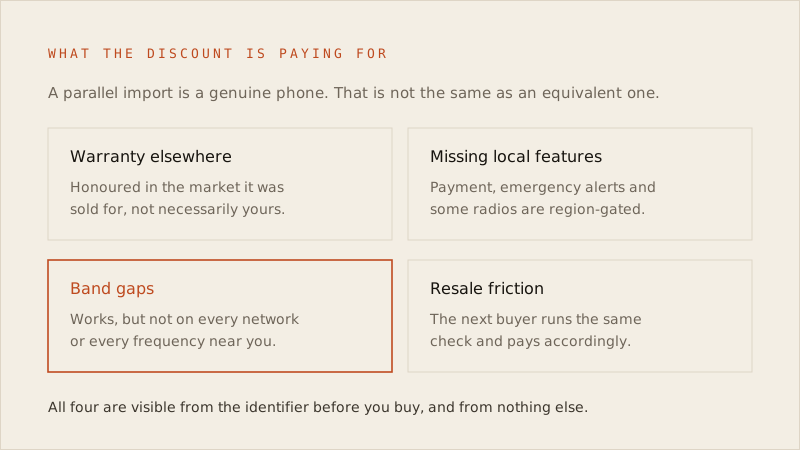
Parallel imports — genuine devices brought in outside the manufacturer's own distribution — are legal to own in most places and are the reason a phone can be substantially cheaper than the same phone in a local shop.
The discount is not free money. Warranty is served in the market the device was sold for. Some features are gated by region, including payment services, emergency alert systems and occasionally particular radios. And the band profile may simply not cover the frequencies your networks use, which produces a phone that works, just not everywhere you go.
The seller's side of it
For anyone reselling, the risk is not usually legal. It is that the next buyer runs the same check, discovers the variant, and prices accordingly — or walks. A margin built on the customer not looking is a margin that erodes as checking gets easier.
The straightforward answer is to describe what you are selling. "Imported, variant X, these bands, warranty served in market Y" is a listing that survives scrutiny, and it prices itself honestly rather than being repriced by a dispute later.
It also happens to be the listing a lookup can generate automatically, which is the recurring theme: the information that protects both sides of the transaction is already in the number, and the only decision is whether to read it.
Read next
Turn an IMEI into a device record.
Brand, model, code name, device type and radio bands, in one call. Tell us what you're building and we'll set you up with a key.