An intake form that doesn't lie to you
Every dropdown asking a person to classify a device is a chance to be wrong with no way of noticing. One checkable field replaces most of them.
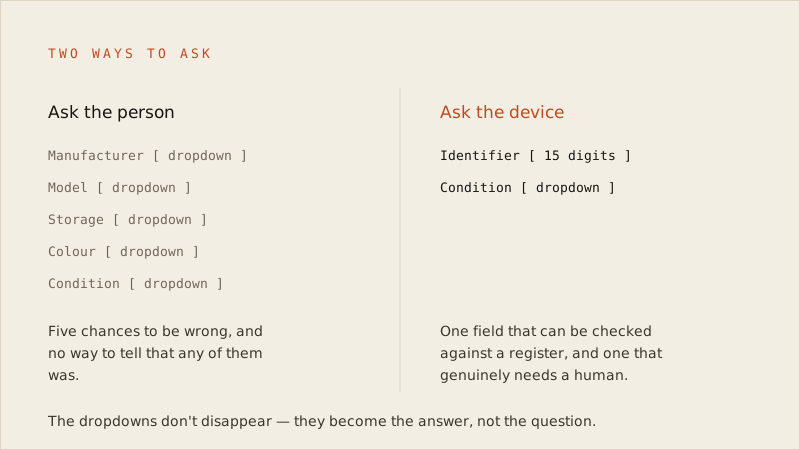
Most intake forms for second-hand devices are built the obvious way: a series of dropdowns asking whoever is at the counter to say what the device is. It is a reasonable-looking design that produces data nobody can trust, and the reason is worth spelling out.
Why dropdowns produce unfalsifiable data
A dropdown records an opinion. Manufacturer, model, storage tier, colour — each is a judgement made by a person under time pressure, and each is stored with exactly the same confidence as a fact.
The problem is not the error rate, which may be low. It is that nothing downstream can tell a correct entry from an incorrect one. There is no second source to compare against, so a wrong model sits in the database looking identical to a right one until a customer complains or a part does not fit.
An identifier is different in kind. It is not an opinion about the device; it is something the device says about itself, and it can be checked.
The shape that works
Ask for the number. Resolve it. Fill the classification fields from the answer, and keep the human input for the things a human is genuinely needed for.
- Identifier — typed, scanned or dialled. Validate the checksum in the browser before anything is submitted.
- Condition — genuinely requires a person. No lookup will tell you the screen is cracked.
- Accessories, packaging, notes — also human, also not derivable.
The dropdowns do not disappear. They become the output of the process rather than its input, which is the whole distinction: the same fields, populated by something that can be verified.
Store what was declared, not only what was resolved
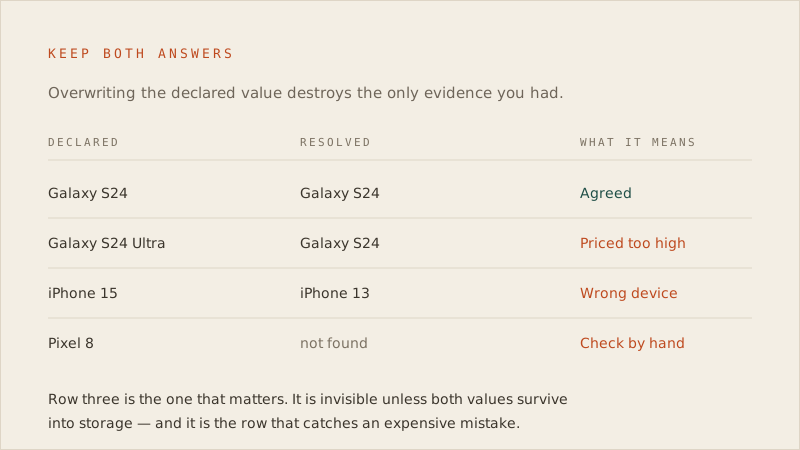
It is tempting to overwrite whatever the seller said with what the register returned, since the register is the better source. That throws away the most valuable field in the row: the disagreement.
A seller who declared one model while the device resolves to another has told you something. It might be an honest mistake, it might be a swapped housing, it might be a deliberate misdescription — but a system that silently corrected the value cannot distinguish any of those from a clean intake.
Small decisions that pay off
- Strip spaces and dashes before validating. People paste from all sorts of places and a rejected paste is a form somebody abandons.
- Accept both fifteen-digit and fourteen-character identifiers and work out which you got, rather than making the person classify it.
- Show the resolved device back to the operator before they commit. A wrong number is caught in the second it takes to read "iPhone 13" when the phone in hand is a Pixel.
- Record the moment of capture. Six months later the question will be what was true at intake, not what is true now.
None of this is elaborate. It is the difference between a form that collects claims and one that collects evidence, and the cost of the difference is a single field.
Read next
Turn an IMEI into a device record.
Brand, model, code name, device type and radio bands, in one call. Tell us what you're building and we'll set you up with a key.