Four checks before you hand over the money
Most bad second-hand phone deals fail the same four tests, and all four can be done standing in front of the seller in under five minutes.
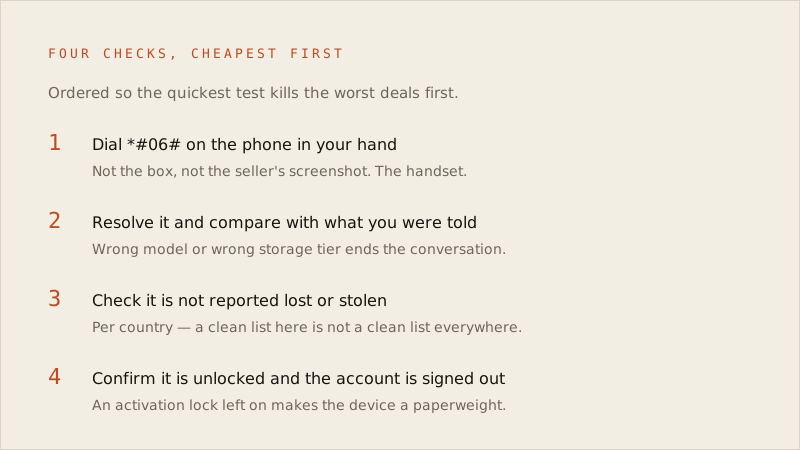
A used phone can be a bargain or an expensive brick, and the difference is usually knowable before any money changes hands. What follows is ordered deliberately: the cheapest test comes first, because it kills the worst deals fastest.
1. Read the IMEI off the phone itself
Dial *#06# on the handset you are holding. Not the box, not the label, not a screenshot the seller sent you — the device.
This matters because every other number attached to a phone can be replaced. Stickers peel off, boxes get swapped, screenshots are of somebody else's phone. The number the handset reports when you dial the code is the one the network will use.
2. Resolve it and compare with the advert
Fifteen digits are enough to establish what the device actually is: manufacturer, model, code name, device type, and the radio bands it supports.
Two things are worth checking against what you were told. The obvious one is the model — a different model than advertised ends the conversation. The subtler one is the variant: the same commercial name can cover several distinct devices with different radio profiles and different resale values.
That second check is also the one that catches the honest mistake. A seller who genuinely believes they are selling the international version of a phone can be wrong, and neither of you finds out until it will not hold a signal.
3. Check it has not been reported
A handset reported lost or stolen can be blocked from networks. Blocked means it makes calls to nobody, and no repair, reset or setting change reverses it.
One caveat that catches people out: blocking registries are national. A device with a clean record in the country you are standing in may be blocked in the country it came from, and cross-border resale is exactly how such handsets travel. A clean check where you are is good news, not a guarantee.
4. Confirm it is unlocked and signed out
Two different locks, both worth checking, and both easy to miss because a phone can look perfectly normal with either one active.
- Carrier lock — the handset only accepts SIMs from one operator. Test it with your own SIM before paying, not after.
- Activation lock — the manufacturer's account is still signed in, so a factory reset produces a device that asks for credentials you do not have. Watch the seller sign out and reset it in front of you.
Of the two, the activation lock is the one that turns a phone into a paperweight, and it is the one most often left on by accident by sellers with no bad intent at all.
What the seller does is also evidence
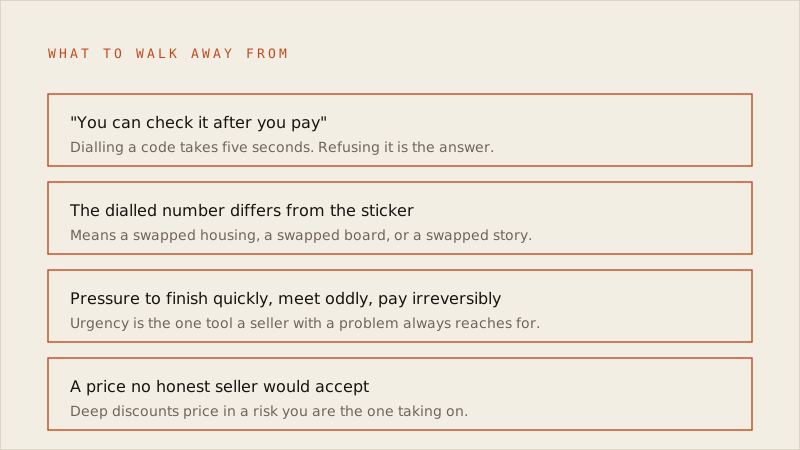
The checks above take a few minutes and cost nothing. A seller with nothing to hide has no reason to object to any of them, which makes an objection informative in itself.
The same goes for the price. A discount steep enough to feel like luck is usually a risk being transferred rather than a bargain being offered — and after the handover, it is your risk.
If you are buying at volume
Everything above scales badly when done by hand. Shops and buyback operations run the same logic through an intake system: read the number, resolve it, compare against what the seller declared, and price from what came back rather than from what was claimed.
The individual buyer's version of that is a phone, a dialled code and five minutes of patience. It catches most of what matters.
Read next
Turn an IMEI into a device record.
Brand, model, code name, device type and radio bands, in one call. Tell us what you're building and we'll set you up with a key.